 Decibel Shield
Decibel chart › Riding a subway
How loud is riding a subway?
Riding a subway measures 90–95 dB, roughly as loud as a tractor with no cab. At 95 dB it is at or above the 85 dB line where hearing damage starts: NIOSH puts the safe limit at about 48 minutes a day. Normal conversation runs about 60 dB for comparison.
Last updated:
| Decibel level | 90–95 dB |
|---|---|
| Hearing risk | Moderate risk — At 94 dB, NIOSH limits exposure to about 1 hour per day |
| Safe exposure (NIOSH) | About 48 minutes a day |
| Typical setting | city |
Figures sourced to CDC. See the full decibel levels chart for every source.
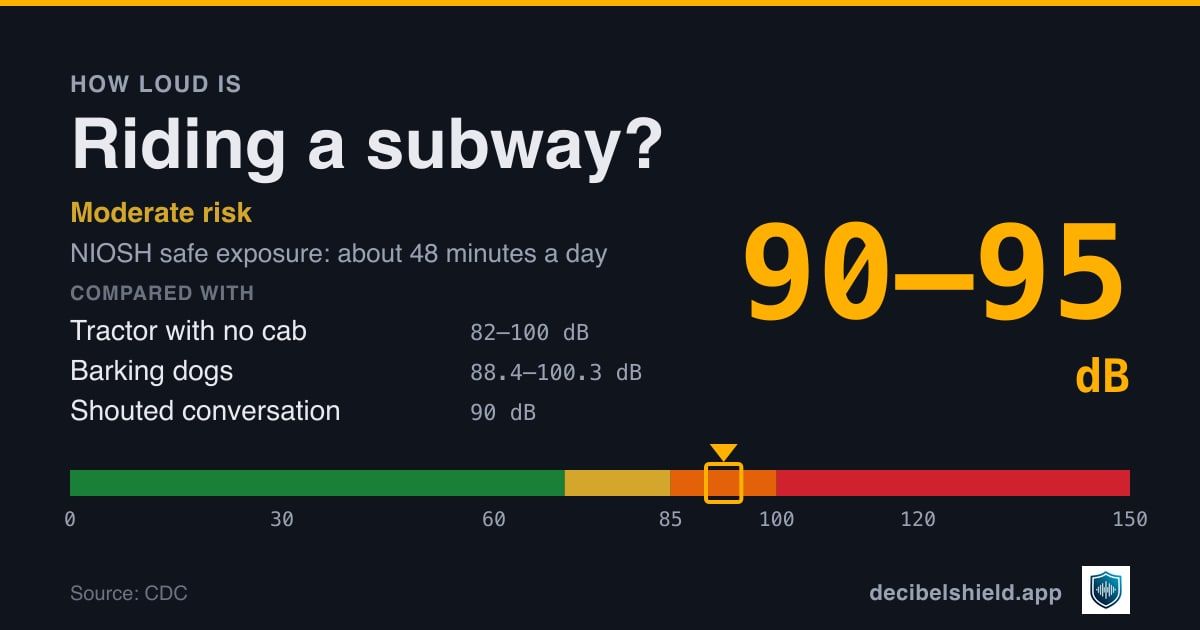
How riding a subway compares
On the decibel scale, 90–95 dB sits above the 85 dB line where sustained exposure damages hearing. Sounds at a similar level:
- Tractor with no cab 82–100 dB
- Barking dogs 88.4–100.3 dB
- Shouted conversation 90 dB
- Motorcycle 95 dB
Everything at this level, with safe exposure times: how loud is 92 dB? →
How loud is riding a subway?
Riding a subway measures 90–95 dB, roughly as loud as a tractor with no cab. At 95 dB it is at or above the 85 dB line where hearing damage starts: NIOSH puts the safe limit at about 48 minutes a day. Normal conversation runs about 60 dB for comparison.
Is riding a subway dangerous to hearing?
Yes — at 95 dB, riding a subway is loud enough to damage hearing over time. NIOSH limits safe exposure to about 48 minutes a day; use hearing protection beyond that.
Measure it yourself
Decibel levels vary with distance and surroundings. Check the real level where you are with the free online decibel meter — no install, nothing recorded — or see the full decibel levels chart.