Decibel Shield
Decibel chart › Outdoor residential area
How loud is an outdoor residential area?
An outdoor residential area measures about 55 dB, roughly as loud as a window air conditioner. That sits well below the 85 dB level where hearing damage begins, so it carries no hearing-damage risk at any length of exposure. Sleep and concentration are a separate question: the WHO night guideline is 45 dB. Normal conversation runs about 60 dB for comparison.
Last updated:
| Decibel level | 55 dB |
|---|---|
| Hearing risk | No risk — Safe at any duration; the EPA's 1974 level for outdoor areas where human activity takes place |
| Safe exposure (NIOSH) | No limit — safe at any duration |
| Typical setting | outdoors |
Figures sourced to EPA. See the full decibel levels chart for every source.
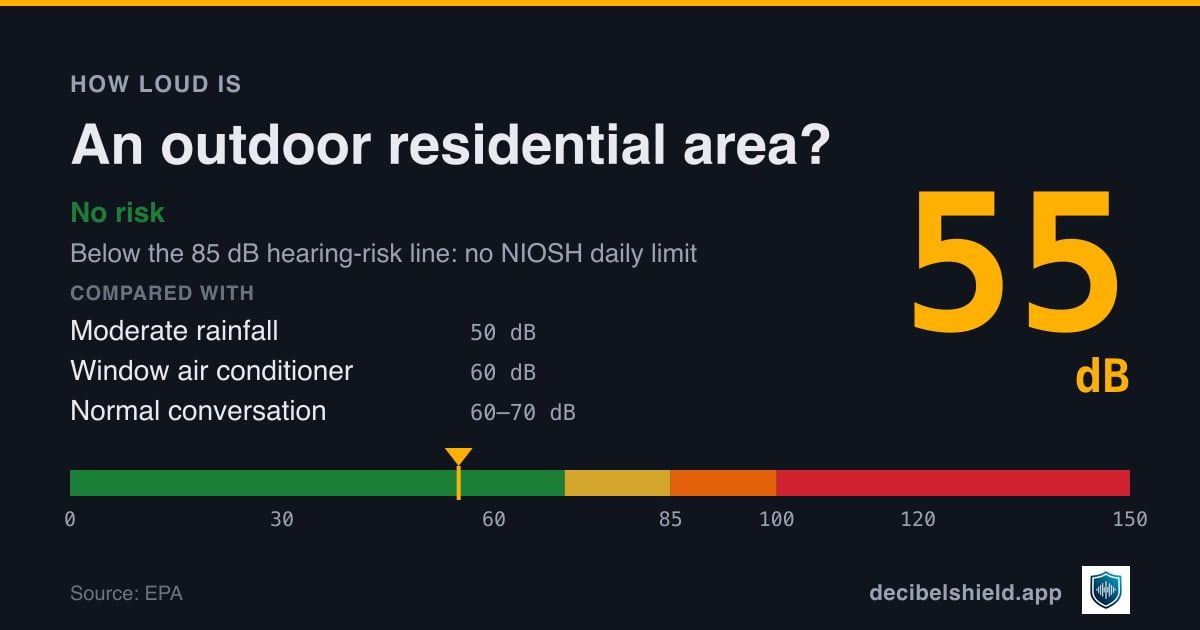
How an outdoor residential area compares
On the decibel scale, 55 dB sits in the safe range, below everyday conversation. Sounds at a similar level:
- Window air conditioner 60 dB
- Moderate rainfall 50 dB
- Empty classroom 46 dB
- Normal conversation 60–70 dB
Everything at this level, with safe exposure times: how loud is 55 dB? →
How loud is an outdoor residential area?
An outdoor residential area measures about 55 dB, roughly as loud as a window air conditioner. That sits well below the 85 dB level where hearing damage begins, so it carries no hearing-damage risk at any length of exposure. Sleep and concentration are a separate question: the WHO night guideline is 45 dB. Normal conversation runs about 60 dB for comparison.
Is an outdoor residential area dangerous to hearing?
No — at 55 dB, an outdoor residential area is below the 85 dB level where hearing damage begins, so ordinary exposure carries no hearing risk.
Measure it yourself
Decibel levels vary with distance and surroundings. Check the real level where you are with the free online decibel meter — no install, nothing recorded — or see the full decibel levels chart.